
Downtown Chicago Loop Office & Commercial Space
Chicago’s central business district offers unmatched transit connectivity, the city’s largest office inventory, and commercial space options for every budget. From iconic LaSalle Street financial towers to State Street retail flagships, the Loop remains the heartbeat of Midwest commerce where every CTA and Metra line converges.
Schedule Free Consultation Call (312) 840-9002Downtown Loop: Chicago’s Central Business District
The Market: The Downtown Loop contains Chicago’s largest concentration of office space—over 140 million square feet across hundreds of buildings ranging from historic early skyscrapers to modern glass towers. This massive inventory creates unparalleled choice and competitive pricing. While trendy neighborhoods like Fulton Market and River North command premium rents, the Loop offers comparable or superior space at lower rates, making it attractive for cost-conscious tenants who prioritize accessibility over neighborhood cachet.
Commercial Space Options: The Loop accommodates virtually every commercial requirement. Class A office space in trophy towers along Wacker Drive runs $50-65/SF annually. Traditional Class A buildings on LaSalle Street and throughout the core command $38-50/SF. Class B buildings—many featuring beautiful historic architecture and recent renovations—offer professional space at $25-38/SF. Retail space along State Street serves the region’s shoppers while ground-floor retail throughout the Loop captures the massive daytime population.
Why Companies Choose the Loop: Transit accessibility is the Loop’s defining advantage. Every CTA rail line passes through the Loop, and all Metra commuter lines terminate at stations within or adjacent to the district. This connectivity means employees commuting from any direction—north shore suburbs, south side neighborhoods, western suburbs—have convenient access. For companies drawing talent from across the metropolitan area, the Loop’s central location minimizes average commute times and eliminates the “wrong side of town” problem that affects peripheral locations.
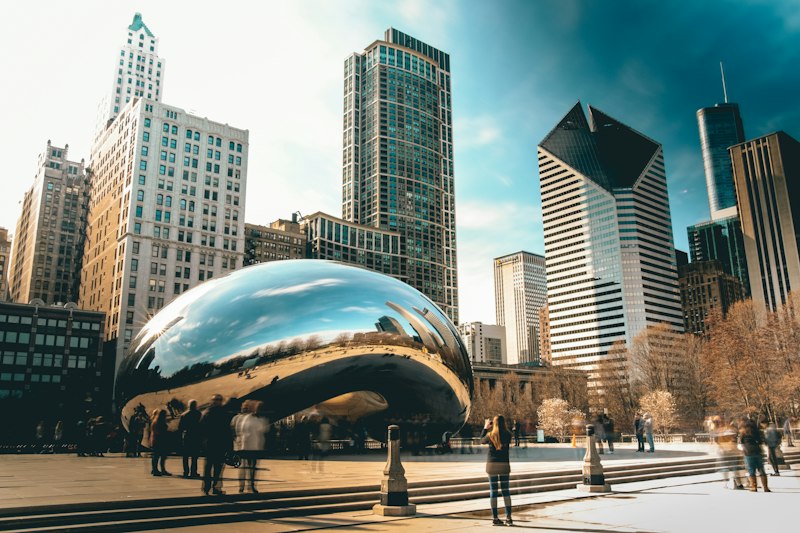
Chicago’s Original Business Address
The Loop earned its name from the elevated train tracks that encircle the district—a transit infrastructure that has defined Chicago’s commercial geography for over a century. While newer neighborhoods have emerged as trendy alternatives, the Loop remains Chicago’s largest employment center, hosting over 500,000 workers daily in industries spanning finance, law, government, technology, and professional services.
LaSalle Street serves as Chicago’s Wall Street, home to the Chicago Board of Trade, major banks, and the financial services firms that support them. The Daley Center and surrounding government buildings anchor a legal and government services cluster. State Street’s retail corridor, anchored by Macy’s flagship store, serves regional shoppers while supporting diverse retail and food service businesses.
The Loop’s building inventory spans Chicago’s architectural history from pioneering early skyscrapers through Art Deco masterpieces to contemporary glass towers. This diversity means tenants can choose spaces ranging from ornate historic lobbies with original elevator banks to sleek modern buildings with floor-to-ceiling glass and river views. Many historic buildings have undergone comprehensive renovations that preserve architectural character while delivering modern mechanical systems and amenities.
Recent years have brought significant residential conversion, adding thousands of apartments and condominiums to formerly commercial buildings. This residential population, combined with the return of office workers, has revitalized the Loop’s after-hours economy with new restaurants, entertainment venues, and services that make the district increasingly attractive for extended business hours.
Downtown Loop Demographics & Transportation
Understanding the market dynamics that drive commercial real estate decisions
Population & Employment
The Loop functions primarily as an employment center, with a massive daytime population that dwarfs the growing residential community. This creates enormous foot traffic and customer density during business hours while supporting a growing 24/7 neighborhood.
- Daytime Working Population 500,000+
- Resident Population 42,000+
- Median Household Income $95,000
- Bachelor’s Degree or Higher 78%
- Office Buildings 500+
- Annual Visitors (Pre-Pandemic) 58M+
Business & Industry Profile
The Loop hosts Chicago’s most diverse business community spanning financial services, law, government, technology, professional services, and hospitality. Major employers anchor ecosystems of supporting businesses.
- Financial Services Firms 500+
- Law Firms 400+
- Government Offices Major Hub
- Hotels 50+
- Restaurants & Food Service 800+
- Retail Establishments 400+
Transportation & Accessibility
CTA “L” – All Lines
Red, Blue, Brown, Green, Orange, Pink, Purple lines all serve the Loop. Unmatched city-wide connectivity.
Metra Commuter Rail
Union Station, Ogilvie, Millennium, LaSalle, Van Buren stations. All suburban lines converge here.
CTA Bus Network
Dozens of bus routes serve the Loop. Major corridors on Michigan, State, Clark, Dearborn, Madison.
Expressway Access
I-90/94 Dan Ryan & Kennedy, I-290 Eisenhower, Lake Shore Drive. Central access to all expressways.
O’Hare Access
45 min via Blue Line direct. Metra North Central Service. Kennedy Expressway.
Midway Access
30 min via Orange Line direct from Loop elevated stations.
Divvy Bike Share
Highest station density in Chicago. Lakefront Trail access via Millennium Park.
Parking
Extensive public garages. $25-45/day, $300-500/month reserved. Most employees use transit.
Commercial Property Types in Downtown Loop
Chicago’s largest and most diverse commercial real estate market serves every business requirement
Office Space
The Loop offers Chicago’s most diverse office inventory across every class and price point. Trophy towers along Wacker Drive feature floor-to-ceiling glass, river views, and premium amenities. Classic LaSalle Street buildings provide prestigious financial district addresses. Historic buildings throughout the Loop offer character space with ornate lobbies, high ceilings, and architectural distinction at competitive rates.
Sublease availability from law firms, financial services companies, and other tenants adjusting space needs creates opportunities for below-market occupancy with existing buildout.
Retail & Restaurant Space
State Street remains Chicago’s primary retail corridor, anchored by Macy’s flagship and featuring national retailers, restaurants, and entertainment venues. Ground-floor retail throughout the Loop serves the massive daytime population—coffee shops, quick-service restaurants, convenience retail, and service businesses thrive on worker foot traffic.
The Theatre District along Randolph supports pre-show dining, while the growing residential population creates demand for neighborhood-serving retail.
Medical & Healthcare Space
The Loop’s central location and transit accessibility make it ideal for medical practices serving patients from across the metropolitan area. Northwestern Medicine, Rush, and other health systems maintain Loop presences. Dental practices, optometry, dermatology, mental health services, and specialty care offices serve both the working population and downtown residents.
Medical space typically locates in professional office buildings with appropriate zoning and accessibility compliance.
Coworking & Flexible Space
Major coworking operators including WeWork, Spaces, and Industrious maintain significant Loop presences, offering flexible terms for growing companies, remote teams, and businesses testing the market. Many traditional landlords have introduced flexible space options within their buildings.
Executive suite operators provide turnkey private offices with shared amenities for professional services firms, satellite offices, and small teams.
Government & Institutional
The Loop hosts Chicago’s primary government facilities including City Hall, the Daley Center courts complex, the Thompson Center state offices, and numerous federal buildings. Law firms, government contractors, lobbying organizations, and civic institutions cluster near these facilities for convenient access.
Proximity to courts is essential for litigation-focused law firms and legal services providers.
Data Center & Tech Infrastructure
The Loop’s fiber infrastructure and carrier hotel presence at 350 E Cermak (adjacent) support technology operations requiring robust connectivity. Colocation facilities serve financial services firms requiring low-latency trading infrastructure and technology companies needing Chicago presence.
Smaller tech tenants benefit from the district’s connectivity for cloud-dependent operations.
Downtown Loop Commercial Real Estate Services
Expert tenant representation across Chicago’s central business district
Loop Office Search
Navigate the Loop’s massive inventory to find space matching your requirements. We search every building—from trophy towers to value-oriented Class B properties—plus off-market opportunities and corporate subleases offering below-market rates with existing buildout.
Lease Negotiation
Loop landlords manage large portfolios with professional asset managers. We leverage market knowledge, competing options, and timing to negotiate favorable terms including rent abatement, tenant improvement allowances, and flexible lease structures.
Lease Renewal Strategy
Don’t assume your current space is your best option. We evaluate renewal proposals against market alternatives, ensuring you have leverage whether you stay or relocate. Many tenants achieve significant savings through competitive renewal negotiation.
Why Businesses Choose the Downtown Loop
Unmatched Transit Access
Every CTA rail line and every Metra commuter line converges in the Loop. Employees commuting from any direction have convenient access, minimizing average commute times and making your office accessible to the broadest talent pool.
Diverse Building Inventory
From modern glass towers to historic landmark buildings, the Loop offers more choice than any other Chicago market. This diversity enables matching space to culture and budget with options unavailable in smaller submarkets.
Competitive Pricing
While trendy neighborhoods command premiums, comparable Loop space often costs less per square foot. Class B buildings with recent renovations offer professional space at rates matching or beating suburban alternatives.
Institutional Proximity
Courts, government offices, financial exchanges, and major institutions cluster in the Loop. Law firms, financial services, government contractors, and businesses requiring institutional access benefit from walkable proximity.
Neighborhood Amenities & Business Services
The Loop’s massive daytime population supports extensive amenities for workers and visitors. Hundreds of restaurants range from quick-service spots serving the lunch rush to acclaimed dining destinations for client entertainment. The Theatre District along Randolph Street anchors Chicago’s performing arts scene with the Chicago Theatre, Goodman Theatre, and numerous other venues.
Dining: The Loop offers every cuisine and price point, from food courts and fast-casual concepts to steakhouses and fine dining. Restaurant Row along Randolph, the Pedway’s food options, and establishments throughout the district serve the working population. Revival of the Loop’s residential community has added neighborhood restaurants serving evening and weekend diners.
Fitness & Wellness: Major fitness chains including LA Fitness, Fitness Formula Clubs, and boutique studios serve Loop workers. Many office buildings include fitness facilities for tenant use. The lakefront’s running and biking paths are accessible via Millennium Park.
Hotels & Hospitality: The Loop’s concentration of hotels—from budget options to luxury properties like The Palmer House and Chicago Athletic Association—accommodates business travelers, visiting clients, and conference attendees. Major convention business at McCormick Place supports extensive hospitality infrastructure.
Cultural Attractions: The Art Institute, Millennium Park, the Chicago Cultural Center, and the Theatre District provide cultural amenities for employees and entertainment options for client visits. These assets enhance quality of life and support corporate hospitality.

Downtown Loop Commercial Real Estate FAQ
Find Your Downtown Loop Commercial Space
Expert tenant representation to navigate Chicago’s largest market—at no cost to you. We represent tenants exclusively, never landlords.
Schedule Free Consultation Call (312) 840-9002